




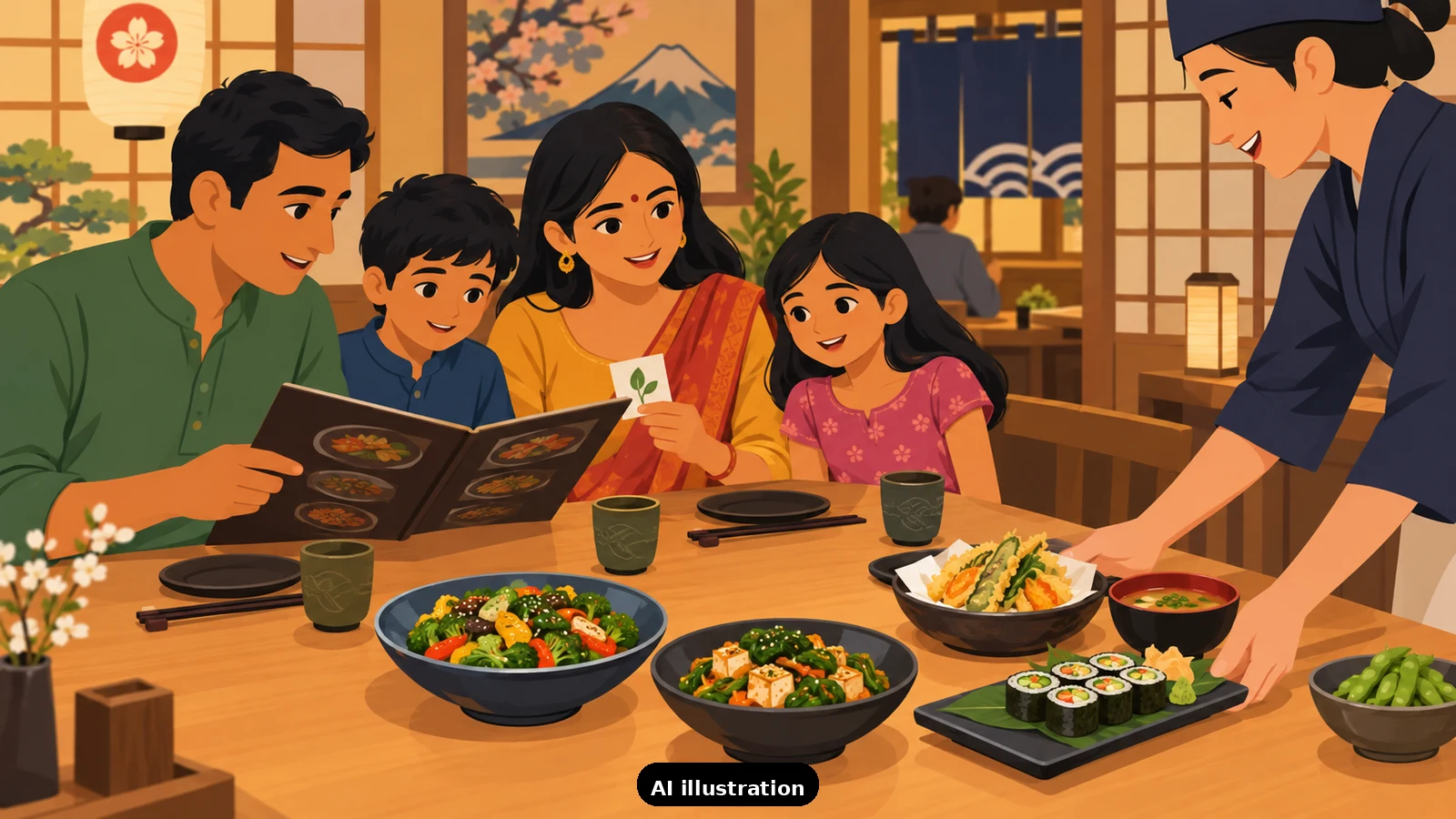
Honest answer: Japan takes more work for a pure vegetarian than Thailand or Europe, but it is absolutely doable - hundreds of Jain and vegetarian Indian families eat well there every month. The difficulty is not a lack of vegetables; Japan is full of tofu, rice, pickles, noodles and mountain vegetables. The difficulty is that "vegetarian" as a category does not map cleanly onto Japanese cooking, and fish hides in places no menu warns you about.
The number one hidden ingredient: dashi. Dashi is the stock at the heart of Japanese cooking, and its classic form is made from katsuobushi - dried bonito, a fish - sometimes with niboshi (dried sardines). It shows up in miso soup, noodle broths, simmered vegetables, tamagoyaki, chawanmushi, okonomiyaki batter and most "vegetable" side dishes. A dish can contain no visible piece of fish or meat and still be made entirely on fish stock. Japan's official tourism guide itself warns that stocks and sauces usually contain meat or fish ingredients even when the dish looks vegetarian.
The other repeat offenders. Katsuobushi also appears as a topping - those pink fluttering flakes on okonomiyaki, takoyaki and tofu. Ponzu and many dipping sauces use fish extracts. Furikake rice seasoning usually contains fish. Some curries and ramens add pork or chicken extract to "vegetable" versions. And a Japanese waiter hearing "no meat" may honestly believe a dish with fish or bacon garnish qualifies - the word vegetarian, as an import, is understood loosely, per the official guide.
What actually works. Learn the sentence, not the dictionary: "Nikku to sakana to dashi ga haitte imasu ka?" - does this contain meat, fish or dashi? Better, carry a printed dietary card in Japanese that lists exactly what you avoid, including dashi, katsuobushi, niboshi and fish sauce; the official guide recommends this approach because simply saying "vegetarian" is not enough. Show it before ordering, not after the dish arrives.
Your reliable food anchors. Shojin ryori - the Zen Buddhist temple cuisine - is the one traditionally vegetarian Japanese cuisine, built on tofu, vegetables and seaweed; it is found mostly at temples and is worth planning a meal around. Indian restaurants are common in every Japanese city and tourist town, and Japan has a growing number of explicitly vegetarian and vegan restaurants in Tokyo, Kyoto and Osaka. Convenience stores carry onigiri, edamame, inari sushi (check the seasoning), salads and fruit for backup meals. HappyCow-style apps and the phrase "vejian" (from the English "vegan") get better results than "bejetarian" alone.
Practical tips from families who have done it. Book at least one shojin ryori meal in Kyoto or at a temple stay - it is both safe and a highlight. Breakfast is the easiest meal: rice, miso soup (ask if it is katsuo dashi - some shops use kombu), pickles and eggs if you eat them. Konbini labels list allergens and ingredients; a phone camera plus a translation app decodes most packaging. And carry familiar snacks from home for travel days - a long Shinkansen ride is not the time to gamble on a bento.
How TripKeeper handles vegetarian travel. This is daily work for our team, not an edge case: on our founder-hosted Japan departures, vegetarian and Jain meals are pre-arranged with restaurants before the group arrives, the tour leader knows which dishes hide dashi, and dietary cards are carried for every stop. Planning your own trip? Mention your dietary needs in the "Plan your trip" inquiry and the same groundwork goes into your itinerary - restaurant shortlists, cards to carry, and which meals to book ahead.

A Miranda House graduate and lawyer who traded courtrooms for slow travel. Cheshta travels with the batches we host ourselves, with a soft spot for travelling alongside elders.
Planning your next trip?
We'll handle insurance, hotels, airport assistance and the itinerary — the same way we do it for every trip.
Questions on this article
asked by readers, answered by us
Was this helpful?
one tap, no sign-up
