




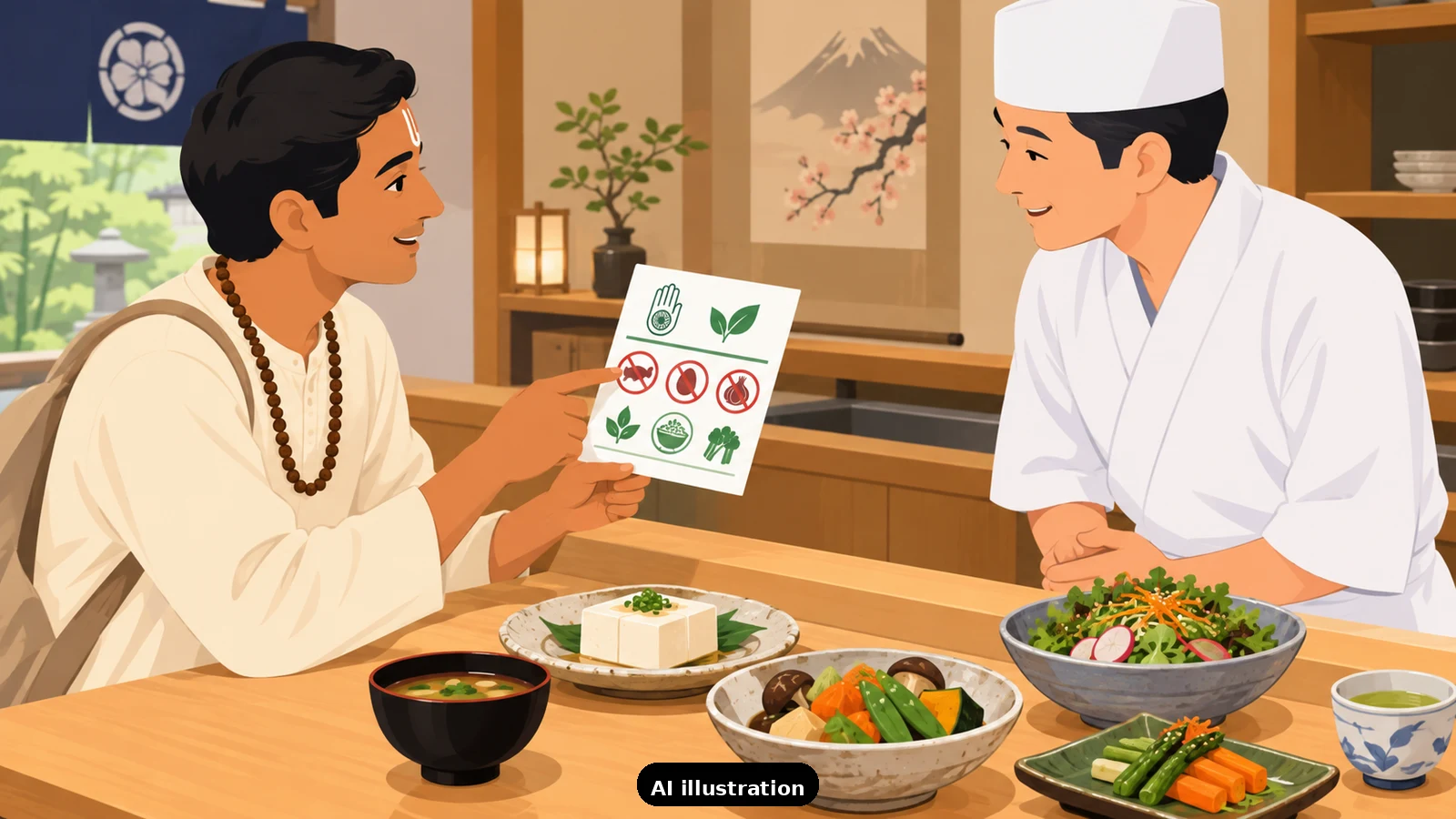
Jain travellers face every challenge a pure vegetarian faces in Japan - the dashi stock hiding in soups and sauces, the loose understanding of "vegetarian" - plus one more layer: Japanese cooking uses onion and garlic constantly, and the concept of avoiding root vegetables simply does not exist in the local food vocabulary. None of this makes Japan impossible for Jains; Jain families travel there happily every month. It just means your preparation has to be one step more deliberate.
Why "vegetarian" is not enough. Japan's official tourism guide itself notes that the word vegetarian is understood loosely, and that stocks and sauces usually contain fish or meat. For a Jain traveller, even a genuinely fish-free, meat-free dish fails if it is built on onion, garlic, potato or carrot. Listing everything verbally is unrealistic at a busy counter - which is why the single most valuable item in your bag is a printed card.
The card that works. Prepare a Japanese-language card that says, plainly: "I follow a strict Jain diet. I cannot eat meat, fish, egg, dashi (fish stock), bonito flakes, onion, garlic, or root vegetables such as potato, carrot, radish, ginger and onion family plants. I can eat rice, tofu, most green vegetables, seaweed, mushrooms (if you eat them), fruits, milk products and noodles made without egg." Carry ten copies - one per day is not too many, because you will hand them to chefs, hotel desks and tour guides. Show the card before ordering and wait for a real answer, not a polite nod; in Japan, a nod can mean "I heard you" rather than "this is possible".
Shojin ryori: almost perfect, with one caveat. Zen Buddhist temple cuisine is the closest Japan comes to a native Jain-friendly cuisine - no meat, no fish, and traditionally no garlic or onion (the "five pungent roots" are excluded in temple cooking). But shojin ryori does use scallions, leeks, wasabi, ginger and sometimes root vegetables, and recipes vary by temple, so present your card when booking and let the kitchen adapt. A shojin meal in Kyoto or at a Koyasan temple stay is both the safest and the most memorable Jain meal in Japan.
Everyday strategies that Jain families use. Indian restaurants are the workhorse - every Japanese city has them, and North Indian kitchens understand "Jain, no onion no garlic" instantly; tell them at the door, not after ordering. Japanese restaurants need the card plus advance notice: calling a day ahead (your hotel desk can do this) turns "impossible" into a special meal surprisingly often. Simple orders work best - plain rice, salt-seasoned edamame, plain tofu, seaweed salad (check the dressing), fruit. Convenience stores cover gaps: plain onigiri (ume or salt varieties - still read labels), bananas, yogurt, nuts and packaged bread.
Travel days need a packed plan. Shinkansen ekiben are almost never Jain-compatible, and station restaurants are the busiest and least adaptable. Jain families who travel Japan comfortably carry a day kit: theplas, khakhra, roasted chana, dry fruits, and instant upma or poha that only needs hot water - available everywhere. It is not giving up on Japan; it is making sure hunger never forces a bad compromise at 9 PM.
How TripKeeper handles Jain travel. Jain meals are routine for our team, not a special request: on our founder-hosted Japan departures, menus are settled with restaurants before the group lands, kitchens get written dietary specs in Japanese, and the tour leader confirms each meal at the table. If you are planning your own trip, say "Jain" in the "Plan your trip" inquiry and your itinerary comes with restaurant shortlists, pre-booked adaptable meals, dietary cards to print, and a support team that can call a restaurant for you mid-trip.

A Miranda House graduate and lawyer who traded courtrooms for slow travel. Cheshta travels with the batches we host ourselves, with a soft spot for travelling alongside elders.
Planning your next trip?
We'll handle insurance, hotels, airport assistance and the itinerary — the same way we do it for every trip.
Questions on this article
asked by readers, answered by us
Was this helpful?
one tap, no sign-up
