




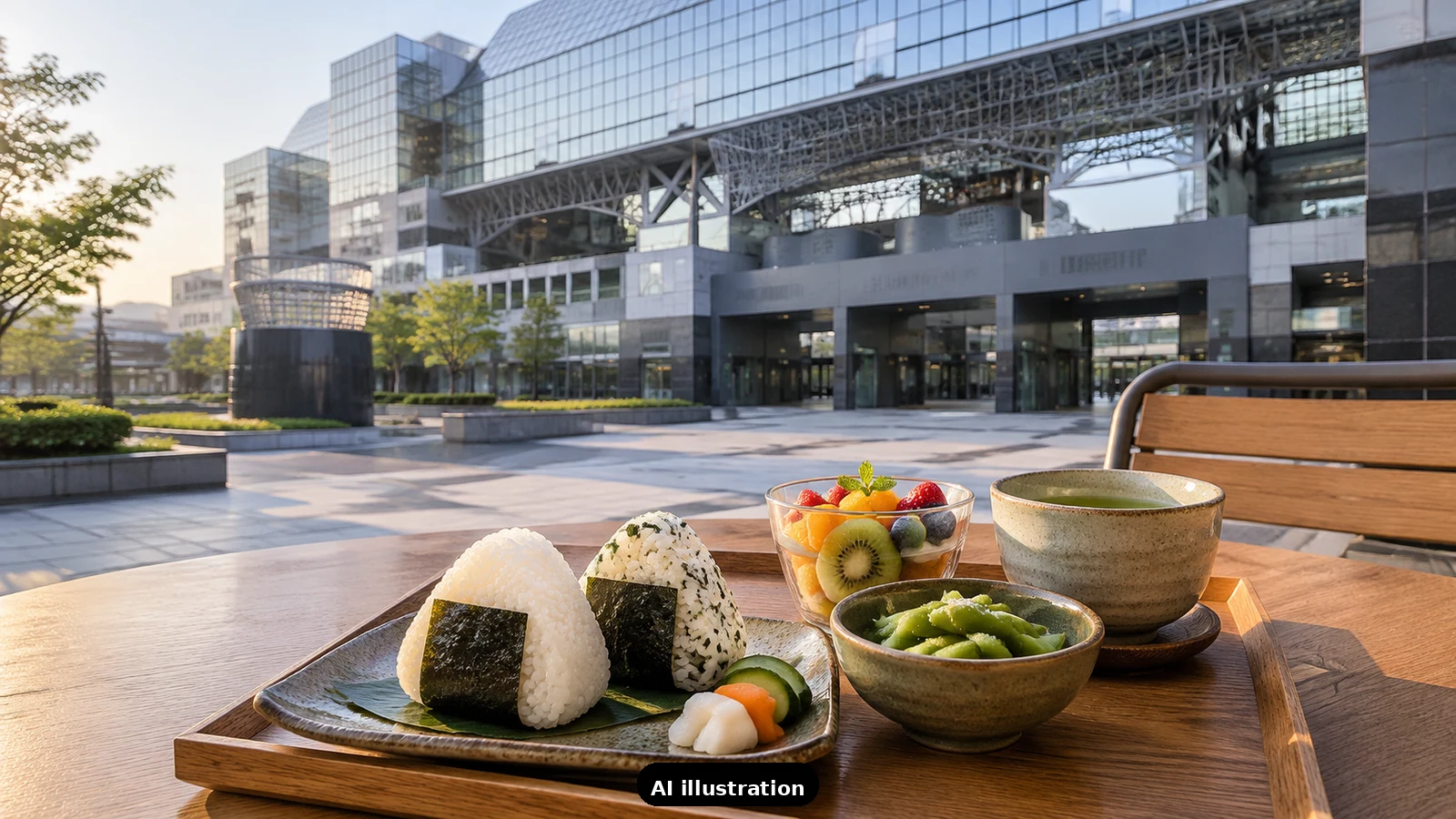
Kyoto Station is where most Indian families first arrive in the city - off the Shinkansen or the Haruka from Kansai airport, luggage in tow, kids hungry. The station area is one of the easier places in Japan to feed a vegetarian family, once you know where to look. Here is the practical map, built around what Indian families actually need: a real vegetarian meal, a Jain option, something quick for the kids, and a fallback that always works.
The closest real meal: Soniya, south of the station. A few minutes' walk from the Hachijo (south) exit, Soniya Indian Nepali Restaurant is one of the highest-rated Indian restaurants in the city, halal-certified, open daily from late morning to late evening, and used to vegetarian diners. For a family stepping off a train, this is the simplest answer to "where do we eat right now" - proper dal, naan, paneer dishes and rice, with spice levels you can ask for.
Fully vegetarian Indian: Shama. Vegetarian Indian Restaurant Shama (the Kyoto branch of a small vegetarian chain) serves an entirely vegetarian Indian menu - thalis, dosas and curries - and is closed on Thursdays, so plan around that. It sits toward the Higashiyama side, a short ride from the station rather than a walk, and pairs naturally with a Kiyomizu-dera day. For a strictly vegetarian or Jain family, this is the most comfortable table in Kyoto.
Jain, vegan and gluten-free: VOG Kyoto. VOG Kyoto bills itself as a vegetarian, vegan, gluten-free and Jain restaurant - one of the very few places in Japan that explicitly cooks for Jain requirements. As with any strict dietary need, call ahead so the kitchen can prepare; no-onion-no-garlic requests go much smoother with notice. Menus and hours change, so verify before you go.
Inside the station itself. The station building's restaurant floors (JR Kyoto Isetan's dining levels) and the underground Porta mall hold dozens of restaurants. For vegetarians these need the usual Japan caution - dashi hides in soups and sauces - but you will find workable meals: plain noodle shops where you can ask, bakeries, fruit and dessert cafes, and Indian or Western places with veg pages on the menu. The convenience stores inside the station are the guaranteed fallback; use the label-check method from our konbini guide and you can assemble breakfast or a train picnic in five minutes.
Budget moves. Station-area lunch sets are the value play, as everywhere in Japan - the same kitchen at half the dinner price, roughly 11:30 to 14:30. Ekiben-style bento boxes look tempting but read them with the photo-translate habit; many are fine, many hide fish stock. If your hotel is near the station, a konbini fruit cup, yogurt and plain onigiri breakfast saves both money and morning arguments.
Communicating dietary needs. Carry a printed Japanese dietary card stating exactly what your family avoids - no meat, no fish, no dashi, no egg, plus onion and garlic if Jain. Showing a card works far better than the English word "vegetarian", which many staff hear as "mostly vegetables". Our Japan travellers get a card with their exact restrictions as part of their travel kit; you can also write one before you fly.
How TripKeeper helps. Families on our founder-hosted Japan departures never solve this alone: the tour leader walks the group through the station area on arrival, points out the reliable vegetarian tables near the hotel, and keeps a Japanese dietary card for every traveller. The same crew handles your hotels, transfers and airport assistance end to end. Travelling independently? Send a "Plan your trip" inquiry and we will mark these options on your day-by-day plan.

A Miranda House graduate and lawyer who traded courtrooms for slow travel. Cheshta travels with the batches we host ourselves, with a soft spot for travelling alongside elders.
Planning your next trip?
We'll handle insurance, hotels, airport assistance and the itinerary — the same way we do it for every trip.
Questions on this article
asked by readers, answered by us
Was this helpful?
one tap, no sign-up
