




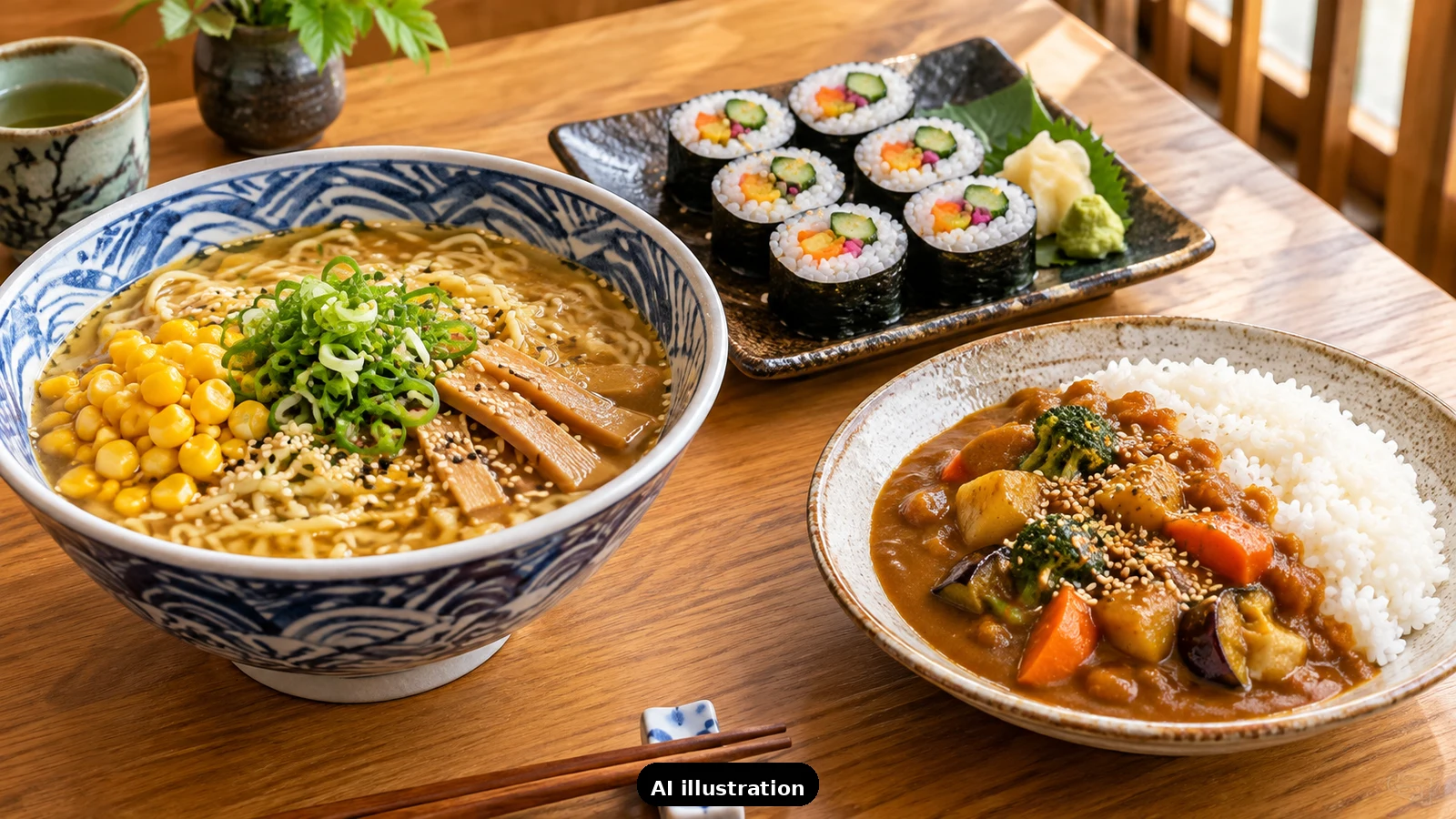
Ramen, sushi and Japanese curry are the three dishes Indian travellers most want to try in Japan - and the three most likely to hide fish or meat in places you would never think to look. Japan's official tourism guide is blunt about it: stocks and sauces usually contain meat or fish even when none is visible, and the word "vegetarian" is loosely understood. This guide walks through each dish honestly: what the trap is, what you can order safely, and where the genuinely vegetarian versions are served.
Ramen: the broth is the problem, not the toppings. Japanese ramen stocks are built by boiling pork or chicken bones (the cloudy paitan style), or clear stocks that still commonly use bonito, sardines or other seafood. Soy-sauce, miso and salt broths sound safe but are usually finished with dashi or meat stock. So a "vegetable ramen" on a regular menu is vegetables sitting in a meat or fish broth. The real veg options are the shops that say so: T's TanTan inside Tokyo Station serves an entirely vegan, sesame-based ramen; Vegan Ramen UZU in Toyosu is a dedicated vegan ramen room; and chains such as Afuri and Soranoiro offer vegetarian or vegan bowls at selected branches. Menus change, so verify the branch before you go - searching "vegan ramen" plus your station name works well.
Sushi: mostly workable, with three traps. The safe orders: kappa maki (cucumber rolls), pickled-vegetable rolls, natto rolls if you can handle natto, edamame, and plain seaweed. Trap one: kanikama, the imitation crab stick, is processed fish. Trap two: tamago, the sweet omelette, is egg - fine for vegetarians who eat eggs, not for vegans or Jains - and it is commonly seasoned with dashi. Trap three: inari sushi, the sweet tofu pocket, looks plant-based but the tofu is usually simmered in a seasoning that can include dashi. At a conveyor-belt sushi place you can assemble a decent vegetarian meal; at a chef's counter, just order the vegetable rolls and skip the set.
Japanese curry: read the roux. Japanese curry rice is made by melting a solid roux block into the pot, and the block is where the animal ingredients hide. Makers' own ingredient lists tell the story: House's Vermont and Java roux list pork extract and a beef-and-pork fat blend, while S&B's Golden Curry sold in Japan lists no meat extract (gelatin appears on its Japanese allergen list) and S&B's overseas Golden Curry range states it contains no meat-derived ingredients. Boxes differ by country, so read the one in your hand. In restaurants the roux is never disclosed, and katsu curry is meat by default - assume restaurant curry is not vegetarian unless the menu says so.
The hidden-seafood layer across everything. Dashi - fish stock, usually bonito - is the base of miso soup, dipping sauces, noodle broths and many dressings. Bonito flakes are sprinkled over okonomiyaki and takoyaki. Fried items can share oil with meat and seafood. This is why "no meat, no fish" needs to be communicated explicitly, ideally with a printed Japanese dietary card rather than a hopeful "vegetarian?".
What works reliably. Shojin ryori, the Buddhist temple cuisine, is the gold standard - plant-based by tradition and served at temple restaurants in Kyoto and elsewhere (confirm about onion and garlic if you are Jain, as recipes vary). Dedicated vegan ramen shops, Indian restaurants, and the convenience-store label-check method we covered in our konbini guide fill the gaps. Japan is genuinely getting easier: vegetarian options are noticeably more common than a few years ago.
A note on eggs. Eggs are common in Japanese comfort food - tamago sushi, omurice, ramen toppings. For most Indian vegetarians eggs are out; when you show a dietary card, make sure it says no egg as well, not just no meat and fish.
How TripKeeper helps. On our founder-hosted Japan departures the team briefs vegetarian and Jain travellers on day one, pre-books restaurants that actually do meat-free versions, and hands every traveller a Japanese dietary card with their exact restrictions - our crew also handles the hotels, insurance and airport assistance, so food is one less thing to fight with. Travelling on your own? Send us a "Plan your trip" inquiry and we will build the same dietary brief into your itinerary.

A Miranda House graduate and lawyer who traded courtrooms for slow travel. Cheshta travels with the batches we host ourselves, with a soft spot for travelling alongside elders.
Planning your next trip?
We'll handle insurance, hotels, airport assistance and the itinerary — the same way we do it for every trip.
Questions on this article
asked by readers, answered by us
Was this helpful?
one tap, no sign-up
