




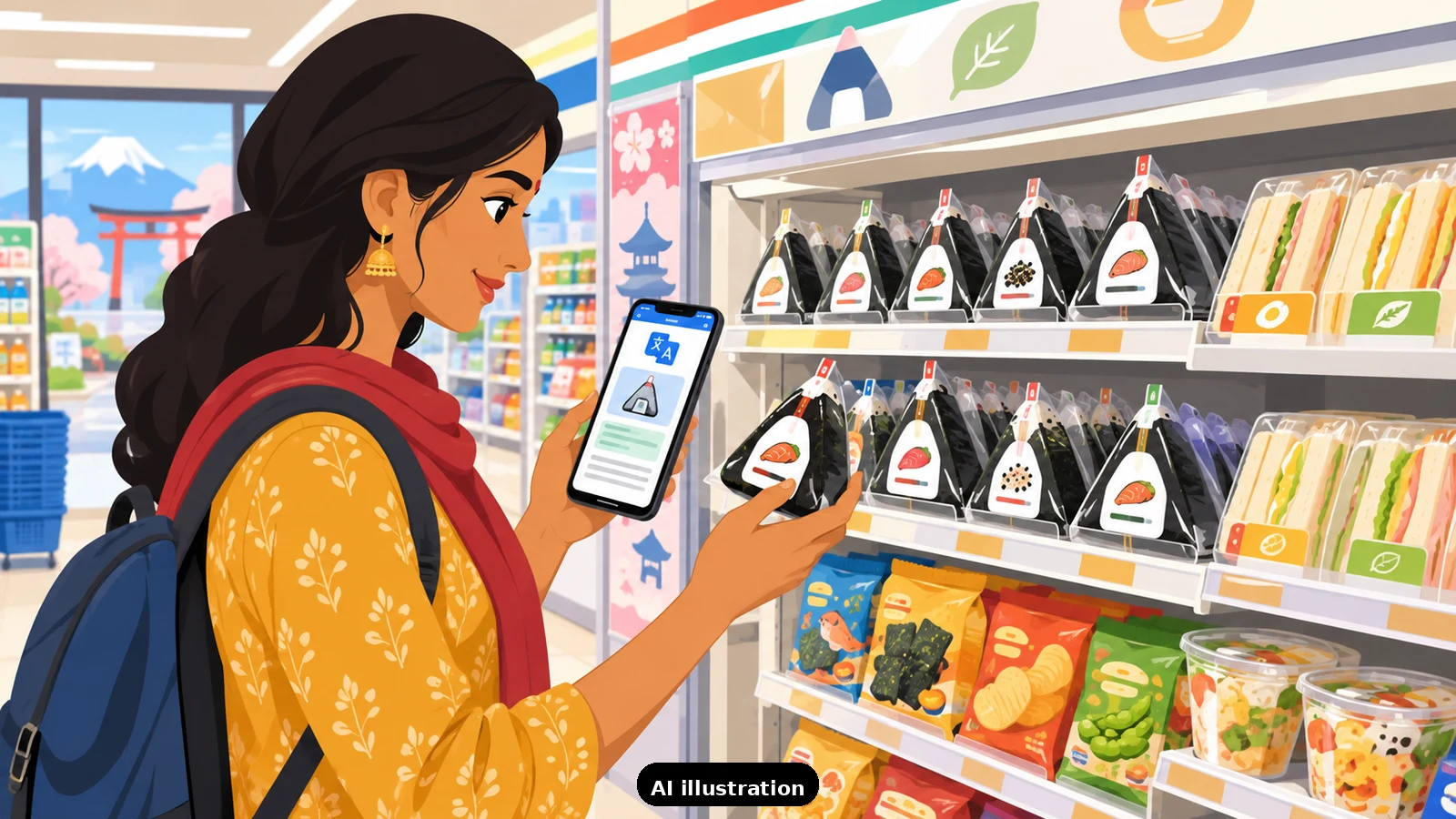
Japanese convenience stores - 7-Eleven, Lawson, FamilyMart and the rest - are clean, everywhere, open late, and quietly one of the best parts of travelling Japan. For vegetarians they are also a minefield of things that look safe and are not. The good news: konbini labelling is thorough, and once you know what to look for, a three-minute label check turns the whole store into a usable pantry. One ground rule before the checklist: recipes change, so no product should be called vegetarian without reading its current ingredient list. This guide teaches you to check, not to trust.
The photo-translate method, your main tool. Every packaged item carries an ingredient list in Japanese. Open Google Translate's camera mode (or any photo translator), point at the ingredients, and read the English overlay. It is imperfect but more than enough to spot animal ingredients. Do this for every item, every time - even for a product you bought last week, because suppliers and recipes rotate without fanfare.
The words that mean fish or meat. Watch the translation for: katsuo (bonito), dashi or katsuo dashi (fish stock), niboshi (dried sardine), fish extract or seafood extract, pork extract, chicken extract, gelatin (often pork-derived), lard, and "meat" in any form - chicken, beef, pork. These appear constantly in rice seasonings, noodle broths, sauces, salads with dressing, and even some breads. A vegetable photo on the packaging proves nothing.
Categories that usually work - verify anyway. Plain salted onigiri and ume (pickled plum) onigiri are the classic safe picks, but even onigiri can contain fish-flavoured seasoning, so check. Edamame, corn cups, fruit cups, bananas, plain yogurt, nuts and roasted sweet potato are straightforward. Inari sushi (sweet tofu pockets over rice) is often fine but the rice or tofu seasoning can include dashi. Salads are safe only if you skip or verify the dressing. Breads and pastries may use lard or gelatin. Boiled eggs are exactly what they look like - useful if you eat eggs, obviously not if you do not.
Categories that usually fail. Almost all hot food from the counter (fried chicken, nikuman buns, oden - the oden broth is dashi), nearly all ramen and noodle cups (fish or pork stock), most bentos, and sandwiches with any sauce or filling. Cup noodles labelled "soy sauce flavour" still typically contain animal stock. When in doubt, the item fails.
Allergen labels help, partially. Japanese packaging highlights mandatory allergens - shrimp, crab, egg, milk, wheat and others - sometimes with a small icon row. A crab or shrimp icon is a fast fail signal. But fish itself (as dashi) often slips through as an ingredient rather than an allergen flag, so the allergen row alone is not sufficient.
Build the habit once. First day: spend ten minutes in a big 7-Eleven, translate labels on ten items, and note your personal safe list in your phone. After that, konbini stops are a two-minute errand for the rest of the trip - breakfast onigiri, hiking snacks, midnight fruit cups.
How TripKeeper helps. On our founder-hosted Japan departures, vegetarian and Jain travellers get a printed label-checklist card in English and Japanese, and the tour leader marks the reliable konbini picks on day one - so by day two you are shopping like a local. Planning independently? The "Plan your trip" inquiry adds the same checklist and a dietary card to your travel pack.

A Miranda House graduate and lawyer who traded courtrooms for slow travel. Cheshta travels with the batches we host ourselves, with a soft spot for travelling alongside elders.
Planning your next trip?
We'll handle insurance, hotels, airport assistance and the itinerary — the same way we do it for every trip.
Questions on this article
asked by readers, answered by us
Was this helpful?
one tap, no sign-up
